The Garden by Channan Din
Swiss Chard Seeds — Rainbow Mixed Colours
Swiss Chard Seeds — Rainbow Mixed Colours
Couldn't load pickup availability
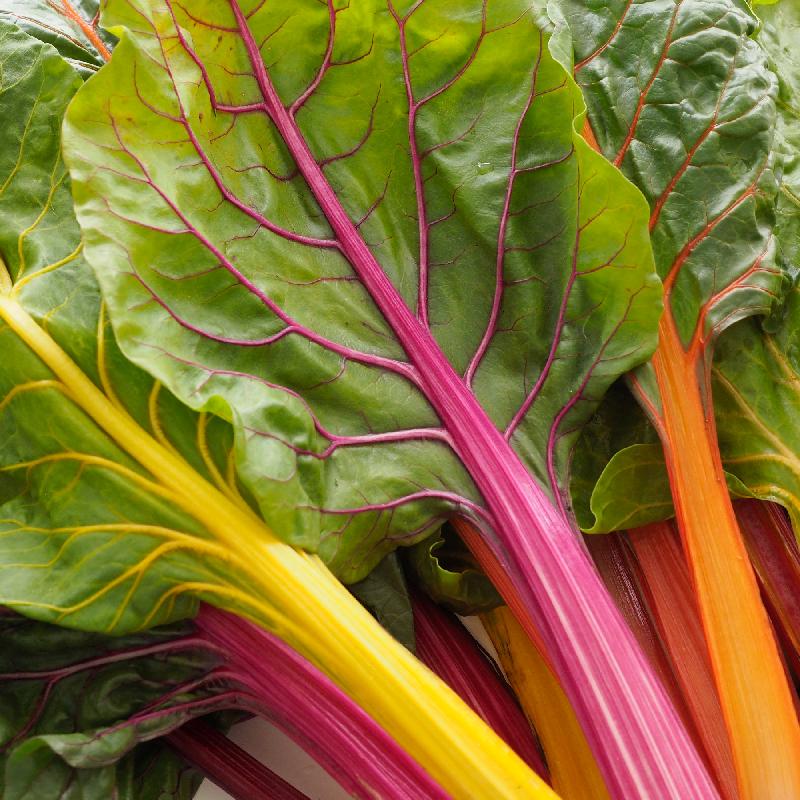
Swiss Chard — Rainbow Mixed Colours. Stems of crimson, gold, pink and orange under deep green leaves, and one of the few vegetables that looks good enough for a flower bed. Sow once and cut leaves from the same plants all winter long.
Growing guide & FAQs
Why Swiss chard belongs in a Pakistani winter garden
Swiss chard (Beta vulgaris subsp. cicla) is a leafy green from the same family as beetroot, grown for its leaves and its thick, brilliantly coloured stems rather than a root. In Pakistan it is still uncommon, which is exactly why it is worth growing — it does everything spinach does, but keeps producing for months instead of bolting after a few cuts.
- Cut-and-come-again. Take the outer leaves and the plant keeps pushing new ones from the centre. One sowing can feed a kitchen through the whole cool season.
- It does not bolt the moment it warms up. Chard is far more heat-tolerant than palak, so it carries on well past the point where spinach has run to seed.
- It is beautiful. The Rainbow mix gives red, yellow, pink, orange and white stems from a single packet. Plenty of people grow it in pots on a balcony purely for the colour.
- It is genuinely easy. Large seed, reliable germination, very few pest problems. A good first vegetable for anyone starting out.
How to sow
- Direct sow where the plants will grow — chard has a taproot and resents being moved. Trays work, but transplant early, at the two-leaf stage.
- Depth: about 1.5 cm (half an inch), watered in well.
- The seed is a cluster. What looks like one seed is actually a small pod holding two or three seeds, so several seedlings usually come up together. This is normal — thin to the strongest one.
- Spacing: thin to 20–25 cm apart for full-size plants, or 10 cm if you want baby leaves.
- Germination takes 7–14 days. Soaking the seed for a few hours before sowing speeds it up noticeably.
- Sun: full sun in winter. In pots, use a container at least 25 cm deep.
Growing on and harvesting
- Water steadily. Chard forgives a lot but dry-then-soaked cycles make the leaves tough and stringy.
- Feed it. It is a leaf crop, so nitrogen matters — a balanced granular NPK every few weeks, or vermicompost worked into the bed at planting, keeps it producing.
- First harvest in 50–60 days for full leaves, or around 30 days for baby leaves.
- Cut the outer leaves at the base with a knife, always leaving the central growing point and four or five leaves on the plant. Never strip it bare.
- Keep cutting. Regular harvesting is what keeps new leaves coming. A plant left alone slows down.
In the kitchen
Treat the leaves like palak and the stems like a separate vegetable. The stems take longer to cook, so slice them and start them a few minutes before the leaves go in. It works in everything spinach works in — bhujia, with daal, in a paratha filling, in soup, or simply sautéed with garlic. Young leaves are good raw in a salad.
Nutritionally it is a serious crop: high in vitamins A, K and C, plus iron, magnesium and fibre, for almost no effort.
Honest limits — read this before you buy
- It is not palak. The flavour is a little earthier and the stems are substantial. Most people prefer it once they have cooked it properly; a few do not.
- It gets big. Full-grown plants take real space. If you have a small bed, grow it for baby leaves at close spacing instead.
- It will not survive a Punjab summer. This is a cool-season crop — it runs to seed and turns bitter once the real heat arrives.
- Leaf miner is the one pest worth watching, as with beetroot. Pick off affected leaves early and it rarely becomes a problem.
Common questions
Is Swiss chard the same as palak?
No. Palak is spinach; chard is a leaf beet, closer to beetroot. Chard lasts far longer in the garden and does not bolt as quickly.
Can I grow it in pots?
Yes, and it looks superb in them. Use a pot at least 25 cm deep and expect to water more often than in a bed.
Why did three seedlings come up in one spot?
Because each "seed" is a cluster containing two or three. Thin to the strongest — it is not a fault in the seed.
How long will one plant keep producing?
Through the whole cool season if you keep harvesting the outer leaves and feeding it. Several months from one sowing is normal.
Are the coloured stems different in flavour?
Barely. The colour is the point; all of them eat the same.
Delivery and payment
Delivery is free inside Lahore and Rs 250 anywhere else in Pakistan on parcels under 3 kg, and free on orders over Rs 3,500. Cash on Delivery is available nationwide, and you can also pay before dispatch by JazzCash, Easypaisa or bank transfer.
Buying for a nursery, farm or restaurant garden? Message us on WhatsApp at 0333-6427336 for bulk pricing.
The Garden by Chanan Din has been supplying seeds from Lahore since 1932, and every lot is germination tested before it is packed.
Share