The Garden by Channan Din
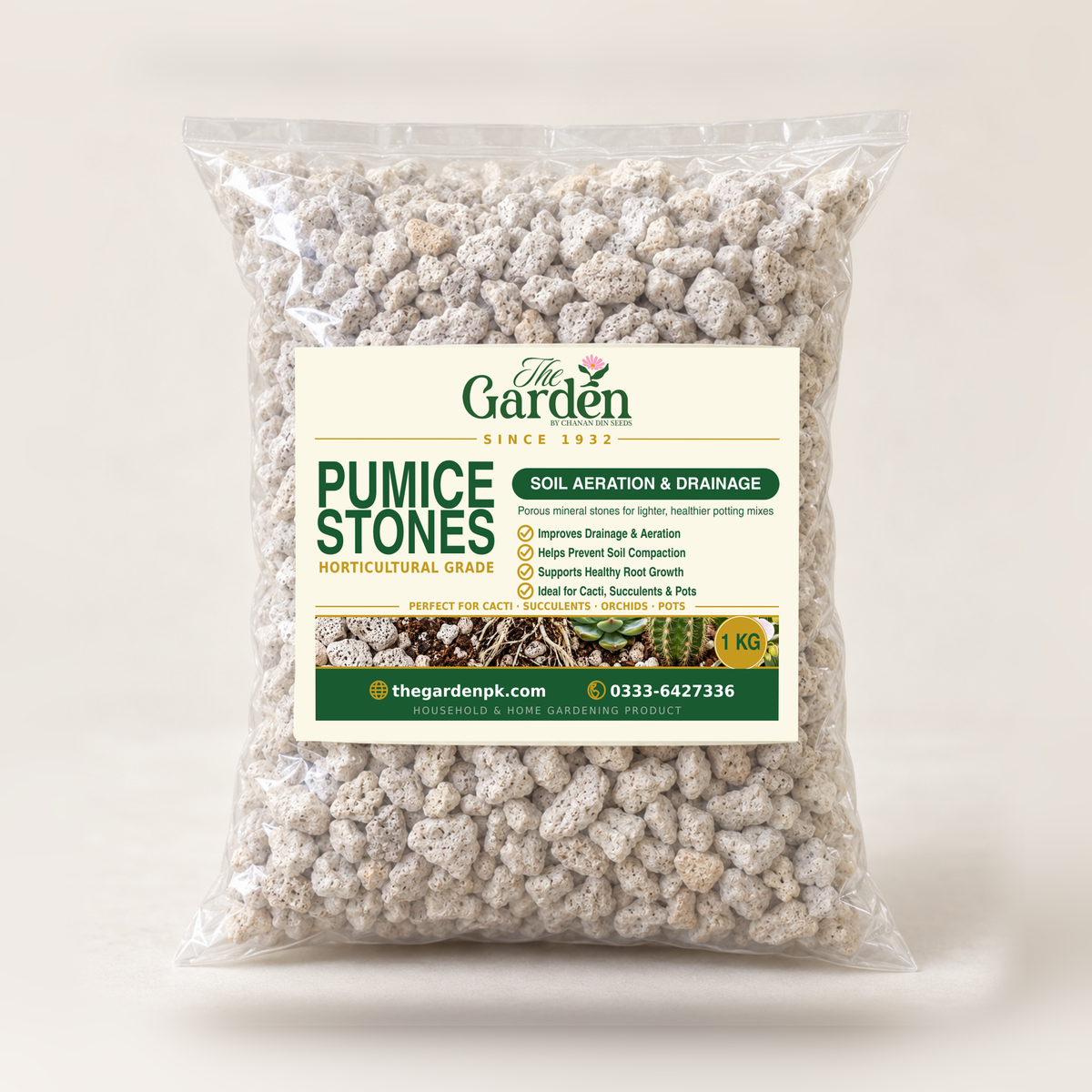
Pumice Stones — Horticultural Grade for Soil Aeration & Drainage, Cacti & Succulents
Pumice Stones — Horticultural Grade for Soil Aeration & Drainage, Cacti & Succulents
Couldn't load pickup availability
Horticultural grade pumice — porous volcanic stone that makes a potting mix lighter, airier and free-draining, and never breaks down. The single best fix for cacti, succulents, orchids, aroids and any plant that keeps rotting in heavy soil.
Growing guide & FAQs
What pumice is and why it works
Pumice is volcanic rock that cooled so fast, and with so much gas trapped inside it, that it set full of tiny holes. Those holes are the whole point: they hold air where roots need it and let surplus water run straight through, while the pore walls still hold a little moisture for the plant to draw on.
It is completely inert and pH neutral. It adds no nutrition and takes none away — it changes the physics of your soil, not the chemistry.
Why pumice beats the alternatives
- It does not crush. Perlite is soft and breaks down into dust within a season or two, and the mix silts up and suffocates again. Pumice is hard stone — the air spaces you build today are still there in three years.
- It does not float. Perlite rises to the surface every time you water and ends up as a white crust on top instead of doing its job in the root zone. Pumice is heavy enough to stay mixed in.
- It does not rot. Bark and husk break down and turn to sludge. Pumice is mineral — it lasts as long as the pot does, and you can wash and reuse it when you repot.
- It anchors top-heavy plants. A tall cactus or a big succulent in pure light mix tips over. Pumice adds weight where you want it.
How to use it
- Cacti and succulents — this is the classic use. Blend 40–50% pumice with soil and a little compost. If your cactus mix still stays damp for days, you have not added enough.
- General potting mix — 20–30% through the mix, for houseplants, seedlings, herbs and vegetables in pots. Roots get oxygen, and overwatering stops being fatal.
- Orchids and aroids — mix with bark and coco chips for a chunky, open medium that drains fast and still holds humidity.
- Bonsai — a standard component of free-draining bonsai substrate.
- Top dressing — a layer over the soil surface keeps the crown of the plant dry, stops stem rot, discourages fungus gnats from laying eggs, and looks clean.
- Rinse it first if it looks dusty, and mix it in dry. Do not simply put a layer of stones at the bottom of the pot — that does not improve drainage, it just raises the waterlogged zone. Blend it through.
What it fixes
- Root rot and stem rot from soil that stays wet too long.
- Soil that has gone hard and compacted in the pot and now sheds water off the top instead of soaking in.
- Fungus gnats, which breed in a permanently damp surface.
- Plants that sulk after repotting because the new mix is too dense for roots to push through.
Honest limits — read this before you buy
- It is not a fertilizer. Pumice is inert and holds almost no nutrients of its own. Pair it with vermicompost, bonemeal or a balanced feed — pumice handles the air and water, they handle the food.
- It is not a growing medium on its own. Some growers do use pure pumice hydroponically, but for normal pot growing it is an amendment to be mixed in.
- More is not always better. Past about 50% in an ordinary potting mix, pots dry out so fast you will be watering every day in summer.
- A layer at the bottom of the pot does nothing. This is the most common mistake with any drainage material. Mix it through the soil.
Common questions
Pumice or perlite?
Same job, different lifespan. Perlite is cheaper and lighter; pumice does not crush, does not float, and lasts for years. For anything you intend to keep, pumice is the better buy.
Can I reuse it?
Yes. When you repot, sieve it out, rinse it and use it again. It does not wear out.
Will it change my soil pH?
No. It is neutral and inert.
Is it safe for indoor plants?
Yes, and it is one of the best things you can add to indoor pots — indoor soil dries slowly and that is what kills most houseplants.
Is it safe around pets and children?
It is plain volcanic stone with nothing added. Just do not let it be swallowed, as with any small stones.
Delivery and payment
Delivery is free inside Lahore and Rs 250 anywhere else in Pakistan on parcels under 3 kg, and free on orders over Rs 3,500. Cash on Delivery is available nationwide, and you can also pay before dispatch by JazzCash, Easypaisa or bank transfer.
Buying for a nursery or landscaping project? Message us on WhatsApp at 0333-6427336 for bulk pricing.
The Garden by Chanan Din has been supplying seeds and garden inputs from Lahore since 1932.
Share